2026-06-06
To Fix or Not to Fix? Navigating Your Home Loan Interest Rate in South Africa
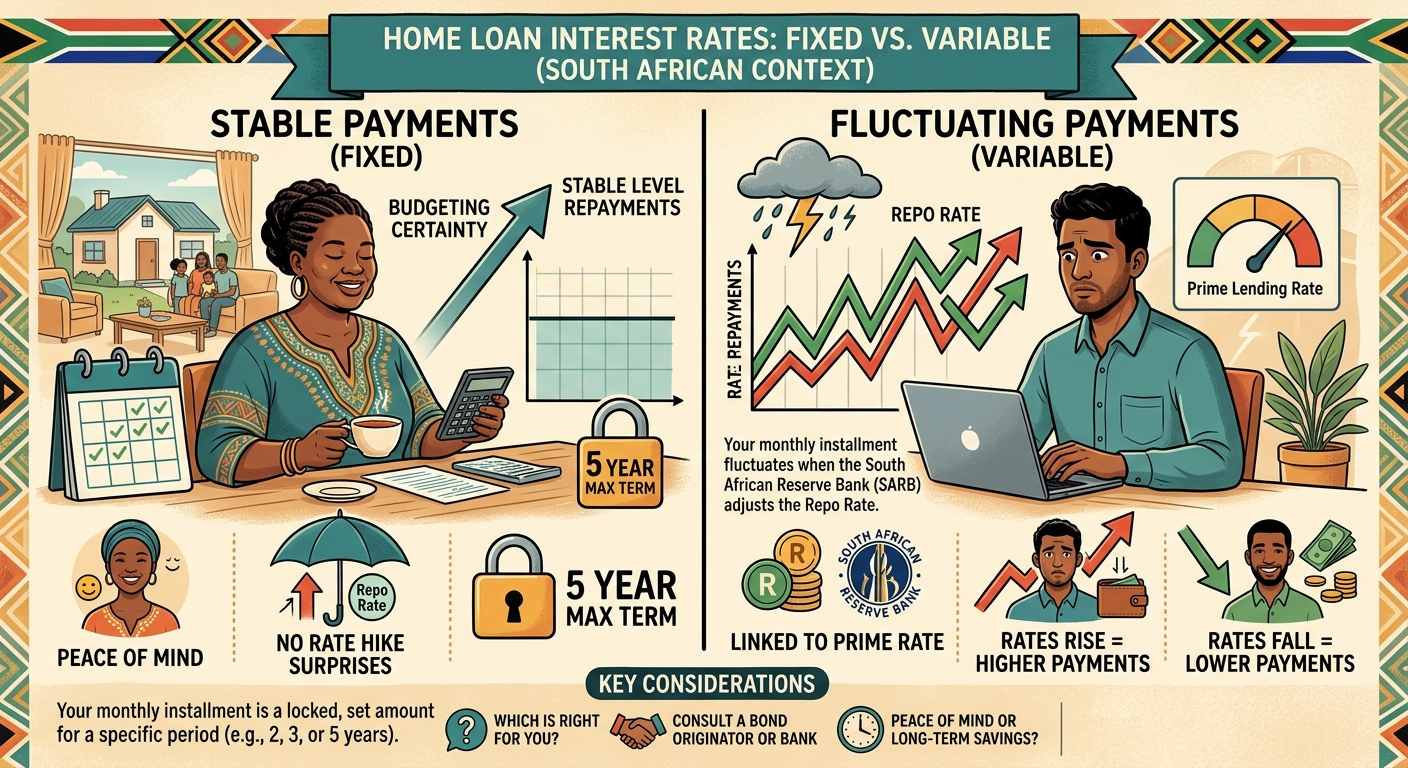
For many South Africans, a home loan is the single largest financial commitment they will ever make. When you receive that life-changing approval for a bond, you are usually placed on a variable interest rate by default.
However, you may have heard of "pegging" your rate — or, in technical terms, opting for a fixed interest rate. When you fix your rate, you are effectively choosing to pay a set percentage for a specific period, insulating your monthly budget from the volatility of the South African Reserve Bank's (SARB) repo rate.
But is this peace of mind worth the cost? Let's break down the pros and cons to help you decide.
The basics: variable vs fixed
- Variable (linked) rate: Your interest rate is linked to the prime lending rate. When the SARB changes the repo rate, your bank adjusts your prime-linked rate accordingly, meaning your monthly instalment fluctuates.
- Fixed rate: You and your bank agree on a specific interest rate for a set term. Regardless of what happens to the economy or inflation, your monthly payment remains exactly the same for that period.
| Feature | Variable rate | Fixed rate |
|---|---|---|
| Monthly payment | Moves with prime | Stays the same |
| Starting rate | Lower | Higher (premium) |
| If rates rise | You pay more | You are shielded |
| If rates fall | You pay less | You miss the saving |
| Maximum term | Full bond term (20–30 yrs) | Capped at 60 months |
Pros of fixing your rate
If you value predictability, a fixed rate is your best friend.
- Budgeting certainty: You can plan your finances with full accuracy. You don't have to worry about a sudden SARB rate hike straining your monthly budget.
- Protection against volatility: If the country enters a cycle of rising interest rates, your payments remain shielded. This is particularly beneficial for those on a tight budget who cannot absorb unexpected cost increases.
- Peace of mind: For many, removing the "interest rate anxiety" that comes with every Monetary Policy Committee (MPC) meeting is worth the premium you pay for the service.
Cons of fixing your rate
There are significant trade-offs to "locking in" your rate.
- The "convenience premium": Banks view fixed rates as a higher risk to them. Consequently, the fixed rate offered is almost always higher than the current variable rate at the time of application. You are essentially paying extra for the stability.
- Missed savings: If interest rates drop, you won't benefit. While variable-rate holders see their repayments decrease during a cutting cycle, you remain locked into the higher rate you agreed upon.
- Temporary nature: In South Africa, you cannot fix your rate for the full 20-year term of your bond. Regulations generally limit fixed-rate periods to a maximum of 60 months (5 years). Once that period expires, you must renegotiate or revert to a variable rate.
- Limited timing: You usually cannot opt for a fixed rate until after your bond has been registered. This means you cannot factor it into your initial pre-purchase calculations as a guaranteed long-term cost.
Is it right for you?
Choosing between fixed and variable is a personal decision that depends on your financial profile.
| Choose variable if… | Choose fixed if… |
|---|---|
| You have a flexible income or emergency savings. | Your budget is tight and you cannot afford any payment increases. |
| You want to benefit from potential future rate cuts. | You value peace of mind and financial predictability above all else. |
| You plan to pay off your bond quickly (e.g. through extra payments). | You are risk-averse and prefer to avoid market surprises. |
Final thoughts
Historically, data suggests that variable rates have often worked out cheaper over the long term. However, "cheaper" isn't the only metric for success. If a fixed rate allows you to sleep better at night and keeps your household finances stable, that utility has a value of its own.
Before making your choice, speak with your bank or a reputable bond originator. They can provide you with a breakdown of your current interest rate and run a comparison to show you exactly how a fixed rate would impact your specific bond repayment.
See what your repayment looks like at different rates
A fixed rate usually sits above the current variable rate. Run your bond at both to see the real rand difference before you decide.
Disclaimer: This information is for educational purposes and does not constitute financial advice. Always consult with a qualified financial advisor or your banking institution regarding your specific loan agreement.